Loading...
ArchiveSociety
The Rise of Surveillance: Safety Measure or Orwellian Nightmare?
This is an archived article from the previous version of this site. It is preserved here for reference.
Surveillance has become an increasingly common aspect of our daily lives. From CCTV cameras on street corners to facial recognition technology in airports, we are constantly being watched. This blog post will explore the origins, benefits, drawbacks, and implications of surveillance in society.
Key Takeaways
- Surveillance has become increasingly prevalent in society.
- Surveillance has existed since ancient times and has evolved with technology.
- Surveillance can enhance security and prevent crime, but it can also infringe on privacy and civil liberties.
- Technology has played a significant role in the development of surveillance, including CCTV and facial recognition.
- The legal and ethical implications of surveillance must be considered to balance public safety and individual rights.
The Origins of Surveillance: From Ancient Times to the Modern Era
Surveillance has been around for centuries, with ancient civilizations using spies and informants to gather information. In ancient Rome, for example, the government employed a network of informants known as "delatores" to spy on its citizens and report any suspicious activities. This practice continued throughout history, with various forms of surveillance being used by governments and organizations.
In the modern era, surveillance techniques have evolved with technology. Closed-circuit television (CCTV) cameras became popular in the 1960s and 1970s, allowing for the monitoring of public spaces. Today, CCTV cameras are ubiquitous in many cities around the world. Additionally, advancements in technology have led to the development of facial recognition systems, which can identify individuals based on their unique facial features.
The Benefits of Surveillance: Enhancing Security and Preventing Crime
One of the main benefits of surveillance is its potential to enhance security and prevent crime. CCTV cameras, for example, can act as a deterrent to criminals. Knowing that they are being watched can discourage individuals from engaging in illegal activities. Additionally, CCTV footage can provide valuable evidence for investigations and help law enforcement agencies solve crimes.
Surveillance can also be used to monitor potential threats to national security. Governments may use surveillance techniques to identify and track individuals who pose a risk to public safety. This can help prevent acts of terrorism or other forms of violence.
The Drawbacks of Surveillance: Infringing on Privacy and Civil Liberties
While surveillance has its benefits, it also has drawbacks. One of the main concerns is the infringement on privacy and civil liberties. Constant monitoring can create a culture of fear and distrust, as individuals may feel like they are constantly being watched and their every move is being scrutinized. This can have a chilling effect on freedom of expression and the right to privacy.
Surveillance can also be used for discriminatory purposes. Certain groups may be disproportionately targeted or monitored based on their race, religion, or other characteristics. This can lead to unfair treatment and a violation of individuals' rights.
The Role of Technology in Surveillance: From CCTV to Facial Recognition
Technology has played a significant role in the evolution of surveillance. CCTV cameras have become more advanced, with higher resolution and the ability to capture footage in low-light conditions. Facial recognition technology has also made significant advancements, allowing for the identification of individuals based on their unique facial features.
In addition to CCTV cameras and facial recognition technology, other surveillance tools are also being used. Drones, for example, can be equipped with cameras and used for surveillance purposes. These advancements in technology have made surveillance more efficient and effective.
The Legal and Ethical Implications of Surveillance: Balancing Public Safety and Individual Rights
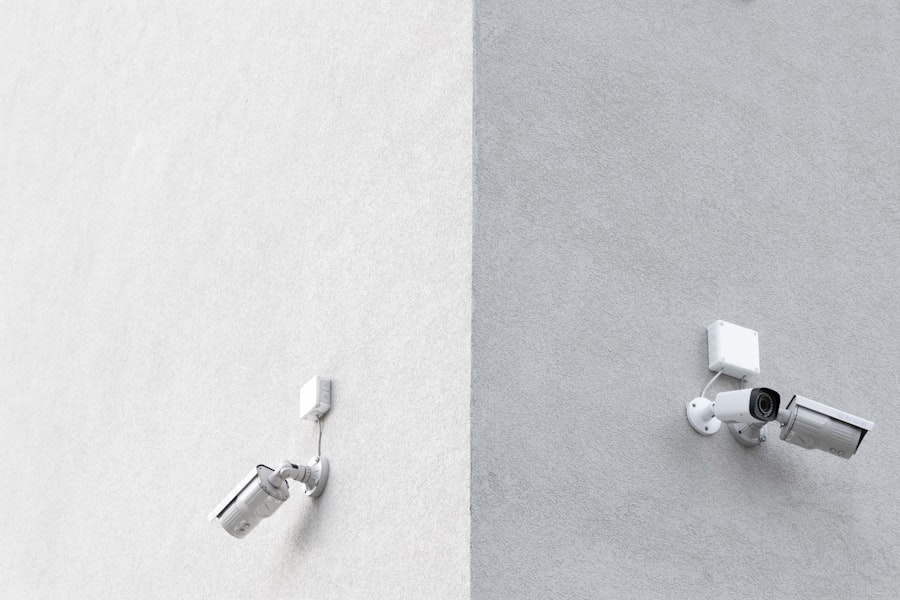
There are legal and ethical implications to surveillance. Balancing public safety and individual rights is a delicate balance that must be carefully considered. Laws and regulations must be in place to protect citizens from abuse of surveillance.
From a legal standpoint, there are laws that govern the use of surveillance techniques. For example, in many countries, law enforcement agencies must obtain a warrant before conducting surveillance on an individual. Additionally, there are laws that protect individuals' right to privacy and prohibit the use of surveillance for discriminatory purposes.
Ethically, there are questions about the extent to which surveillance should be used. Some argue that the potential benefits of surveillance outweigh the potential drawbacks, while others believe that it is a violation of individuals' rights.
The Impact of Surveillance on Society: Creating a Culture of Fear or a Sense of Security?
Surveillance can have a significant impact on society. On one hand, it can create a culture of fear and distrust. Knowing that they are constantly being watched can make individuals feel like they are under constant scrutiny and can lead to self-censorship. This can have a chilling effect on freedom of expression and the ability to engage in activities without fear of being monitored.
On the other hand, surveillance can also provide a sense of security and comfort. Knowing that there are measures in place to monitor and prevent crime can make individuals feel safer in their communities. Additionally, surveillance can help law enforcement agencies solve crimes and bring perpetrators to justice.
The Future of Surveillance: Advancements in Technology and Potential Developments
The future of surveillance is constantly evolving. Advancements in technology will continue to shape the way we are monitored. For example, artificial intelligence (AI) and predictive analytics could be used to analyze surveillance data and identify patterns or potential threats.
Additionally, there are potential developments in surveillance technology that could have significant implications. For example, the use of biometric data, such as fingerprints or iris scans, could be used for identification purposes. This could potentially eliminate the need for physical identification documents.
The Resistance to Surveillance: Advocacy Groups, Activists, and Legal Challenges
There is resistance to surveillance from advocacy groups and activists who argue that it is a violation of individuals' rights. These groups often raise awareness about the potential drawbacks of surveillance and advocate for stricter regulations and oversight.
Legal challenges have also been brought against the use of surveillance. In some cases, courts have ruled that certain surveillance techniques are unconstitutional or violate individuals' rights to privacy.
The debate over surveillance will continue as technology advances and new developments emerge.
The Need for a Balanced Approach to Surveillance in a Democratic Society
In conclusion, a balanced approach to surveillance is necessary in a democratic society. While surveillance can enhance security and prevent crime, it must be done in a way that respects individuals' rights to privacy and civil liberties. Laws and regulations must be in place to protect citizens from abuse of surveillance techniques.
Additionally, there must be transparency and accountability in the use of surveillance. Citizens should have access to information about how surveillance is being used and what safeguards are in place to protect their rights.
Ultimately, the goal should be to strike a balance between public safety and individual rights. This requires ongoing dialogue and debate about the implications of surveillance in society.