Loading...
ArchiveTechnology
How VR Can Revolutionize Remote Training Programs
This is an archived article from the previous version of this site. It is preserved here for reference.
Virtual Reality (VR) technology is a simulated experience that can be similar to or completely different from the real world. It immerses users in a digital environment, allowing them to interact with and manipulate objects in a three-dimensional space. VR has gained significant popularity in recent years, with applications ranging from gaming and entertainment to healthcare and education.
Remote training programs have become increasingly important in today's digital age. With the rise of remote work and the need for flexible learning options, organizations are turning to virtual training solutions to provide effective and engaging learning experiences for their employees. VR technology has the potential to revolutionize remote training programs by creating immersive and interactive learning environments that can simulate real-world scenarios.
Key Takeaways
- VR technology has great potential in remote training programs.
- VR is cost-effective and accessible, making it a great option for remote training.
- Immersive VR experiences can enhance engagement and retention in training.
- VR training programs can be customized for specific industries and job roles.
- VR solutions can improve safety and reduce risks in training.
Advantages of VR in remote training: cost-effectiveness and accessibility
One of the key advantages of using VR in remote training programs is its cost-effectiveness. Traditional training methods often require significant investments in physical infrastructure, such as training facilities, equipment, and materials. With VR, organizations can create virtual training environments that eliminate the need for these costly resources. Instead, learners can access the training program from their own devices, reducing expenses associated with travel, accommodation, and venue rentals.
In addition to cost-effectiveness, VR also offers accessibility for remote learners. Traditional training programs often require participants to be physically present at a specific location, which can be challenging for individuals who are geographically dispersed or have limited mobility. With VR, learners can access the training program from anywhere in the world, as long as they have a compatible device and an internet connection. This opens up opportunities for organizations to reach a wider audience and provide training to individuals who may not have had access to it otherwise.
Furthermore, VR eliminates the need for travel expenses associated with traditional training methods. Learners no longer have to spend time and money on commuting to a physical location for training sessions. This not only saves costs for individuals but also reduces the carbon footprint associated with travel, contributing to a more sustainable approach to training.
Enhancing engagement and retention through immersive VR experiences
One of the key advantages of using VR in remote training programs is its ability to create immersive experiences that engage learners. Traditional training methods often rely on passive learning techniques, such as lectures and presentations, which can be less engaging and result in lower retention rates. VR, on the other hand, allows learners to actively participate in the learning process by interacting with virtual objects and environments.
By creating realistic simulations, VR can provide learners with a hands-on experience that closely resembles real-world scenarios. This not only enhances engagement but also improves retention of information. Studies have shown that learners who engage in experiential learning, such as through VR simulations, have higher retention rates compared to those who rely solely on traditional training methods.
Furthermore, VR can provide learners with the opportunity to practice and apply their skills in a risk-free environment. For example, medical students can perform virtual surgeries without the fear of making mistakes that could harm real patients. This allows learners to gain confidence and proficiency in their skills before transitioning to real-world settings.
Customizing VR training programs for specific industries and job roles
Another advantage of using VR in remote training programs is the ability to tailor the training program to specific industries and job roles. Each industry has its own unique set of challenges and requirements, and traditional one-size-fits-all training programs may not effectively address these needs. With VR, organizations can create customized simulations that closely resemble the specific tasks and environments that learners will encounter in their job roles.
For example, in the manufacturing industry, VR simulations can be used to train employees on operating complex machinery or handling hazardous materials. In the hospitality industry, VR can be used to simulate customer service scenarios or train employees on food safety protocols. By customizing the training program to the specific industry and job role, organizations can ensure that learners receive relevant and practical training that directly applies to their work.
Furthermore, VR simulations can be customized to individual learners' skill levels and learning styles. Learners can progress through the training program at their own pace, allowing them to focus on areas where they need more practice or spend more time on challenging concepts. This personalized approach to training can significantly improve learning outcomes and ensure that each learner receives the support they need to succeed.
Overcoming challenges of remote training with VR solutions
Remote training programs come with their own set of challenges, such as limited interaction between learners and trainers, lack of hands-on experience, and difficulty in assessing learners' progress. VR solutions can help overcome these challenges by providing a more interactive and immersive learning experience.
One of the main challenges of remote training is the limited interaction between learners and trainers. In traditional training settings, trainers can provide immediate feedback and guidance to learners, which is often lacking in remote training programs. With VR, trainers can guide learners through virtual simulations in real-time, providing feedback and support as needed. This not only enhances the learning experience but also allows trainers to assess learners' progress and address any misconceptions or gaps in knowledge.
Another challenge of remote training is the lack of hands-on experience. Traditional training methods often rely on practical exercises or on-the-job training to reinforce learning. With VR, learners can engage in realistic simulations that closely resemble real-world scenarios, allowing them to gain hands-on experience without the need for physical resources or equipment. This not only enhances the learning experience but also prepares learners for real-world challenges.
Furthermore, VR solutions can provide organizations with data and analytics on learners' performance, allowing them to track progress and identify areas for improvement. This data-driven approach to training can help organizations make informed decisions about their training programs and ensure that learners are receiving the support they need to succeed.
Improving safety and reducing risks through VR simulations
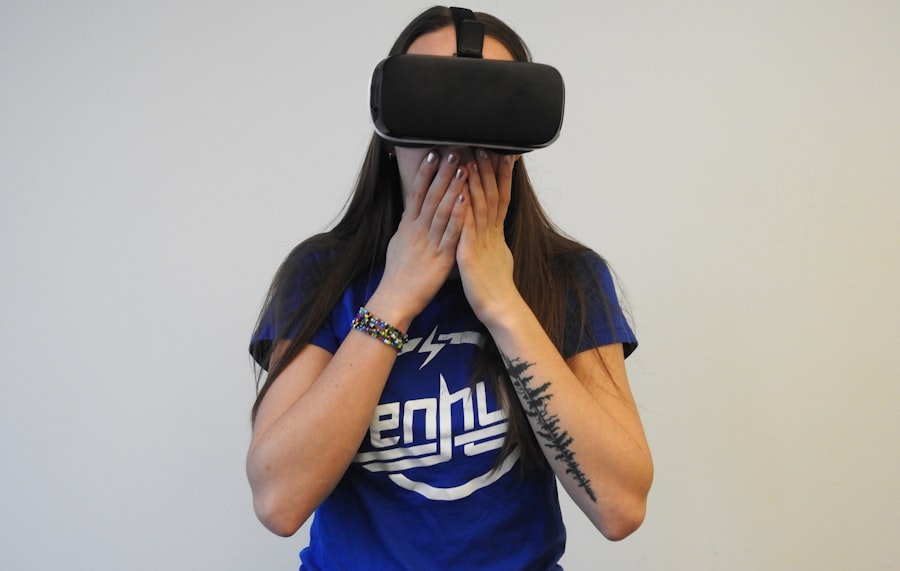
Safety is a critical concern in various industries, such as healthcare, construction, and manufacturing. Traditional training methods often involve exposing learners to potentially dangerous situations or environments, which can pose risks to their safety. VR simulations can help improve safety by providing learners with a risk-free environment to practice and develop their skills.
For example, in the healthcare industry, VR simulations can be used to train medical professionals on emergency procedures or complex surgeries. By practicing these procedures in a virtual environment, learners can gain confidence and proficiency without the risk of harming real patients. This not only improves patient safety but also reduces the potential for medical errors.
Similarly, in the construction industry, VR simulations can be used to train workers on operating heavy machinery or working at heights. By simulating these scenarios in a controlled environment, learners can develop the necessary skills and knowledge to perform their tasks safely. This reduces the risk of accidents and injuries on the job site.
Furthermore, VR simulations can be used to train employees on handling hazardous materials or responding to emergency situations. By providing learners with a realistic and immersive experience, organizations can ensure that employees are well-prepared to handle these situations safely and effectively.
Measuring effectiveness of VR training through analytics and data tracking
Measuring the effectiveness of training programs is crucial for organizations to ensure that their investment in training is yielding positive outcomes. Traditional training methods often rely on subjective assessments or post-training evaluations, which may not provide accurate or reliable data on learners' performance. VR analytics and data tracking can help organizations measure the effectiveness of their training programs in a more objective and data-driven manner.
By collecting data on learners' interactions within the VR environment, organizations can gain insights into learners' engagement levels, performance metrics, and areas for improvement. For example, organizations can track how long learners spend on each task or how many attempts they take to complete a simulation. This data can help identify patterns and trends, allowing organizations to make informed decisions about their training programs.
Furthermore, VR analytics can provide organizations with real-time feedback on learners' performance, allowing trainers to intervene and provide support as needed. For example, if a learner is struggling with a particular task or concept, trainers can receive alerts and provide immediate guidance or additional resources. This personalized approach to training can significantly improve learning outcomes and ensure that each learner receives the support they need to succeed.
Collaborative training through VR: connecting remote learners and trainers
Collaboration is an essential component of effective training programs. Traditional training methods often involve group activities, discussions, and teamwork, which can be challenging to replicate in remote training programs. VR technology can facilitate collaboration by connecting remote learners and trainers in a virtual environment.
By creating virtual meeting spaces or classrooms, VR allows learners and trainers to interact with each other in real-time, regardless of their physical location. Learners can collaborate on group projects, participate in discussions, and receive feedback from trainers, just as they would in a traditional training setting. This not only enhances the learning experience but also fosters a sense of community and engagement among learners.
Furthermore, VR technology can enable trainers to deliver live presentations or demonstrations to remote learners. Trainers can use virtual whiteboards or interactive tools to engage learners and facilitate discussions. Learners can ask questions, seek clarification, and actively participate in the learning process, creating a more interactive and engaging training experience.
Future of VR in remote training: advancements and innovations
The future of VR in remote training holds great potential for advancements and innovations. As technology continues to evolve, we can expect to see more sophisticated VR solutions that offer even more realistic and immersive experiences.
Advancements in hardware, such as headsets and controllers, will make VR more accessible and user-friendly. We can expect to see lighter, more comfortable headsets with improved resolution and field of view. This will enhance the overall VR experience and make it more appealing to a wider audience.
Furthermore, advancements in software and content creation tools will allow organizations to create more realistic and interactive VR simulations. We can expect to see more sophisticated physics engines, realistic graphics, and advanced AI algorithms that can simulate complex scenarios and interactions. This will enable organizations to create highly immersive and engaging training programs that closely resemble real-world situations.
In addition to hardware and software advancements, we can also expect to see innovations in remote training programs themselves. Organizations will continue to explore new ways of delivering training content, such as gamification, virtual coaching, and social learning. These innovations will further enhance the effectiveness and engagement of remote training programs.
Case studies of successful VR remote training programs in various industries
There are already several successful examples of VR remote training programs in various industries. These case studies demonstrate the benefits and outcomes of using VR technology in remote training.
One example is the healthcare industry, where VR is being used to train medical professionals on complex procedures and surgeries. For instance, Osso VR is a company that provides VR simulations for surgical training. Their platform allows medical professionals to practice procedures in a virtual environment, improving their skills and confidence before performing them on real patients. Studies have shown that medical professionals who trained with Osso VR demonstrated higher levels of proficiency compared to those who relied solely on traditional training methods.
Another example is the aviation industry, where VR is being used to train pilots on emergency procedures and flight simulations. For instance, CAE, a global leader in aviation training, offers VR-based flight simulators that provide pilots with a realistic and immersive training experience. These simulators allow pilots to practice emergency scenarios, such as engine failures or severe weather conditions, in a safe and controlled environment. Studies have shown that pilots who trained with CAE's VR simulators demonstrated higher levels of performance compared to those who trained with traditional simulators.
Furthermore, the manufacturing industry is also leveraging VR technology for remote training programs. For instance, Ford Motor Company uses VR simulations to train employees on assembly line processes and safety protocols. By simulating real-world scenarios, employees can gain hands-on experience and develop the necessary skills to perform their tasks safely and efficiently. Studies have shown that employees who trained with Ford's VR simulations demonstrated higher levels of productivity and accuracy compared to those who relied solely on traditional training methods.
These case studies demonstrate the potential of VR in remote training programs across various industries. By creating immersive and interactive learning experiences, organizations can provide effective and engaging training that improves learners' skills and knowledge.